How do you decide whether a new tool will pay for itself in a small craft studio?
A machine only pays for itself when the hours it saves turn into orders you can actually sell. Here is a payback check that survives contact with a real studio.
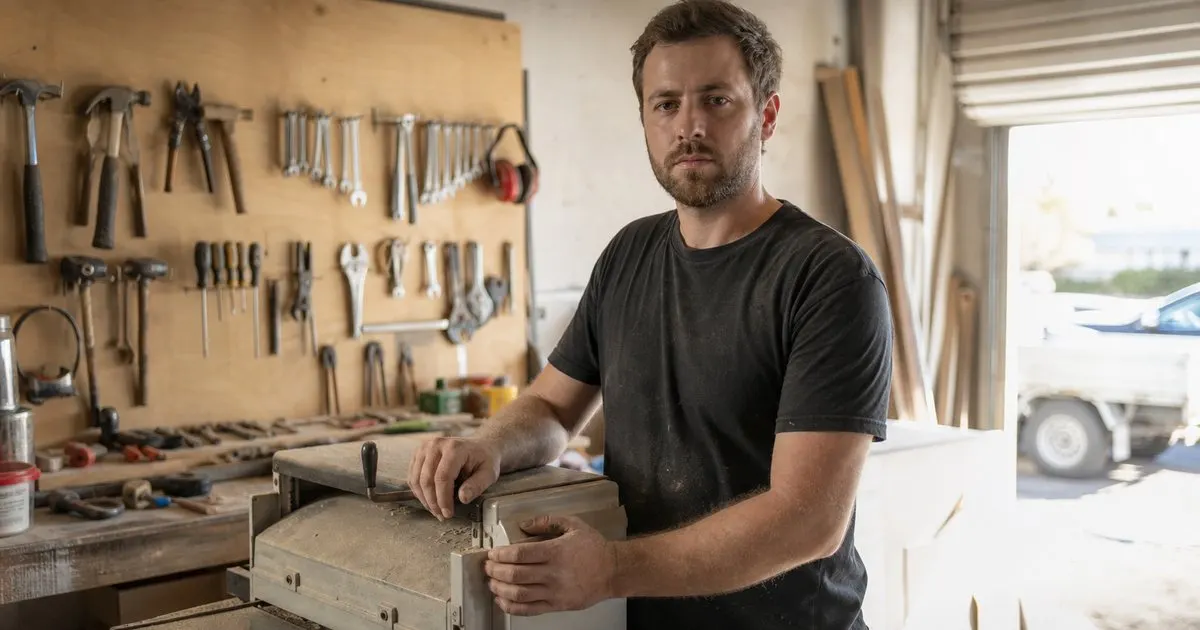
Payback is hours saved times a rate you can actually earn
The usual calculation goes like this: the tool saves twenty minutes per piece, you make sixty pieces a month, that is twenty hours saved, multiply by your target hourly rate and the machine pays for itself in a few months. It is a comforting number and it is almost always wrong, because it treats saved hours as if they were automatically worth money. They are not. An hour only earns anything when it is filled with work that gets sold. If your evenings are already the limit on how much you make and every piece you make sells, then yes, freed hours convert into revenue. If you finish your orders by Thursday and spend Friday waiting for the next one, the tool has bought you a longer weekend, which may be worth having but is not payback. Related: How do you price a custom order request without guessing at the hours?
So run the calculation in two parts. First, how many hours does the tool genuinely remove from work you are already doing, measured on your actual pieces rather than the manufacturer's demonstration. Second, what happens to those hours. If they go into more units that you have buyers for, value them at the net profit per unit, not at a wished-for hourly rate. If they go into work you have been outsourcing, value them at what you were paying the outside supplier. If they go into rest, value them honestly at zero for payback purposes and make the decision on quality of life grounds instead. Those are three different arguments, and mixing them is how a tool ends up justified by reasoning that does not hold.
Keep reading: Why Your Handmade Sale Might Be Losing Money, Pricing Handmade Products With Confidence, Hidden Costs That Eat Maker Margins. See how MakerLedgr helps you per-order shipping and profit calculator for handmade sellers.
Count the whole cost of ownership, not the sticker
The purchase price is usually the smallest surprise. Around it sit freight or delivery for anything heavy, the blades, bits, plates, needles, mats or media the machine consumes, the jigs and fixtures you will build before it earns anything, the electrical work or ventilation some machines require, replacement parts and servicing, and a real amount of space that your studio may not have to spare. Many tools also arrive with a software subscription attached, which is a recurring cost that keeps running whether the machine is busy or idle. Write all of it down before you compare anything to a payback period.
Then add the learning curve, which is the cost most makers forget entirely. For the first few weeks a new machine typically makes you slower, not faster, and it eats material in test pieces and failed settings. Budget that period as lost production rather than pretending it does not exist, and be honest about when you plan to buy. Bringing a machine into the studio six weeks before your busiest season is a common and painful mistake, because the learning period lands exactly when you can least afford the disruption. The quiet stretch after a busy season is usually the right window. Related: Materials Costing Done Right
Test the demand side before you solve the supply side
Ask one blunt question first: is capacity actually what is holding your shop back? Makers frequently buy equipment to solve what turns out to be a demand problem, because building capacity feels productive and marketing does not. The signal to look for is a genuine backlog, a waitlist people have joined, repeat wholesale orders you have had to turn down, or lead times you keep apologizing for. If instead you have open capacity and are hoping the tool will let you drop prices enough to bring in more orders, the payback rests on a price cut and a sales increase that have not happened yet, and that is a much weaker case.
Where the demand is real, test at small scale before committing. Send one batch to an outside service or a maker who already owns the machine and see whether the finished result is what you and your customers actually want. Rent time at a shared workshop or makerspace for a weekend. Buy the well-kept used version of a proven model rather than the newest one, since equipment that holds its value can usually be resold for a good part of what you paid if it turns out not to fit your work. Each of these turns a large irreversible bet into a small reversible one, and they often reveal that the bottleneck was somewhere else entirely, in finishing, packing or photography rather than in the step you were about to automate.
A payback rule that leaves room for judgment
A workable rule for a small studio is that a tool should recover its full cost of ownership within roughly one busy season to a year of realistic use, and that you should be able to fund it from cash the business already has rather than from money you are hoping to earn later. Twelve months is short enough that your forecast has to be about work you can see rather than growth you are imagining, and it protects you from the slow accumulation of half-used machines that a longer horizon permits. If a tool needs three or four years of steady growth to break even, that is not a payback calculation, it is a bet on a future you cannot yet describe. Related: How do you pay yourself from a handmade business without starving the shop?
Then allow yourself to break the rule for reasons that are not financial, as long as you name them. Consistency that removes defects and remakes has real money behind it even when the time saved is small. Dust extraction, guarding, and anything that reduces repetitive strain protects the only pair of hands your business has, and a wrist injury costs far more than a machine. A tool that removes the single step you dread can be the difference between a shop you keep running and one you quietly abandon. Those are legitimate purchases. Just make them with your eyes open, recorded as a decision about health, quality or sanity, rather than dressed up in a payback number that was never going to hold. Related: Hidden Costs That Eat Maker Margins
- Saved hours are only worth money once they turn into work you can actually sell.
- Cost of ownership includes consumables, jigs, servicing, space, subscriptions and weeks of slower output while you learn.
- If you have open capacity, the bottleneck is demand and a new machine will not fix it.
- Aim to recover the full cost within about a season to a year, and name any non-financial reason for going beyond that.

Julien Jimenez
Julien Jimenez is an independent software builder based in Paris. He designs, ships, and operates focused SaaS products for small businesses and independent professionals. Read the full author page.
Know the real profit on every handmade order
Per-order shipping and profit calculator for handmade sellers. MakerLedgr is built to help you put this into practice.
See my marginsMore from the MakerLedgr blog
Why Your Handmade Sale Might Be Losing Money
Pricing Handmade Products With Confidence
Hidden Costs That Eat Maker Margins
Get the MakerLedgr playbook
Practical guides on maker economics, straight to your inbox as we publish them. No spam, unsubscribe any time.