What should a maker do when a craft fair booth loses money?
A bad show is data, not a verdict. Here is how to work out what went wrong, what to change, and when to stop doing shows altogether.
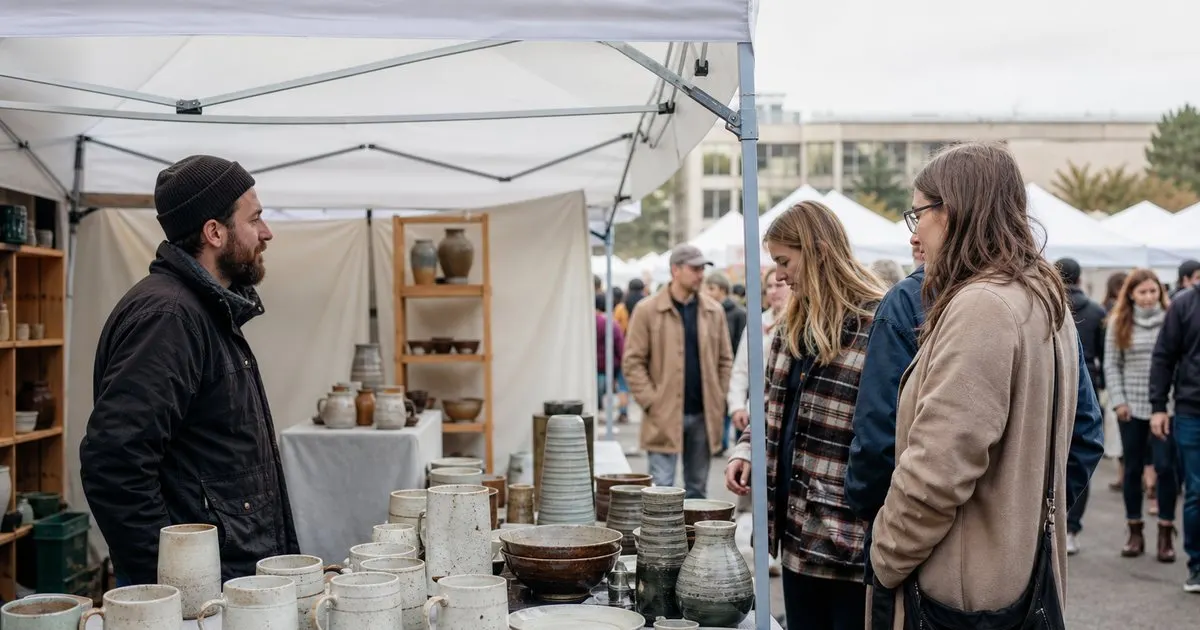
Count the whole cost of the show, not just the booth fee
The booth fee is the number everyone remembers, but it is rarely the biggest cost. Add the application fee, fuel or travel, parking, lodging and meals if the show is far, a share of your tent and display cost, payment processing on card sales, sales tax handling, product that got dirty or damaged, and your hours: the days spent building stock before the show, setup, the full selling day, teardown, and the drive home. Most booth-loss stories get worse once hours are counted, and that worse picture is the honest one. Related: Platform Fees and What You Actually Keep
Then compare that total to gross profit, not to sales. A show can produce a sales figure that looks respectable and still lose money if what sold was mostly low-margin items. Margin per item times units sold, minus the full show cost, is the real result. If you only know sales, you do not yet know whether the show worked. Related: Why Your Handmade Sale Might Be Losing Money
Keep reading: Why Your Handmade Sale Might Be Losing Money, Pricing Handmade Products With Confidence, Hidden Costs That Eat Maker Margins. See how MakerLedgr helps you per-order shipping and profit calculator for handmade sellers.
Diagnose: wrong show, wrong products, or wrong booth
Wrong show looks like an audience mismatch, thin foot traffic, too many vendors selling similar goods, or weather that kept people home. Ask nearby vendors how they did; if most struggled, the show was the problem and no booth tweak would have fixed it. Wrong products looks like a mismatch between what you brought and what show buyers wanted. Fairs often favor lower-priced, gift-ready pieces that people can carry away; if you brought only large statement work, that is a fixable choice rather than a failed business. Related: Pricing Handmade Products With Confidence
Wrong booth is the cheapest problem to fix and the most common. A spot on the edge, no visible pricing, products laid flat at table height instead of displayed at eye level, no card reader, a layout that made people feel they had to commit to stepping in. Clear price signage, height, an open front, and a simple demonstration or process photo change how people approach the table, and at the same show those changes are often the difference between a loss and a profit. Related: How do you price a custom order request without guessing at the hours?
Recover value after the show
A show that lost money on the day can still pay off afterward if you collected something from it. Emails and social follows gathered at the booth turn into online orders over the following weeks. Custom inquiries and wholesale conversations that started at the table count as show revenue if you track them back to it. Note which items people picked up and put down (a price objection) versus never touched (an interest problem); those are two different fixes.
Write a one-page show report while it is fresh: every cost, sales by product, hours, weather, foot traffic, what you would change. After three or four shows the reports show patterns that the emotion of any single show hides. Two shows in the same town might differ mainly by whether you brought your small items, or by which corner of the venue you were in.
Decide whether shows belong in your business
Before applying to the next show, set a break-even. Divide the full show cost by your average margin per item to get the number of units you must sell just to cover it. If that number is higher than you have ever sold at any show, skip it or find a cheaper one. Prefer shows where your own data, or credible vendor reports, support the number over shows that simply sound good.
Some makers do best with two or three strong shows a year and sell online the rest of the time. Others find shows are their primary channel and online is a supplement. There is no right mix, but there is a measurable one: profit per hour by channel. Tracking shows, online, and wholesale side by side, in a per-order tool or a spreadsheet, lets the numbers pick the mix instead of habit or the fear of missing a weekend everyone else is doing.
- Total every show cost including hours, and compare it to gross profit rather than sales.
- Separate show problems, product mix problems, and booth setup problems; each has a different fix.
- Collect emails and leads at every booth so a weak day can still pay off later.
- Set a break-even unit count before applying and let profit per hour by channel decide your show mix.

Julien Jimenez
Julien Jimenez is an independent software builder based in Paris. He designs, ships, and operates focused SaaS products for small businesses and independent professionals. Read the full author page.
Know the real profit on every handmade order
Per-order shipping and profit calculator for handmade sellers. MakerLedgr is built to help you put this into practice.
See my marginsMore from the MakerLedgr blog

Why Your Handmade Sale Might Be Losing Money
Pricing Handmade Products With Confidence
Hidden Costs That Eat Maker Margins
Get the MakerLedgr playbook
Practical guides on maker economics, straight to your inbox as we publish them. No spam, unsubscribe any time.