Which packaging choices actually change your per-order profit on handmade goods?
Packaging is a cost line many makers estimate once and never revisit. Some choices matter a lot, others barely register, and it pays to know which is which.
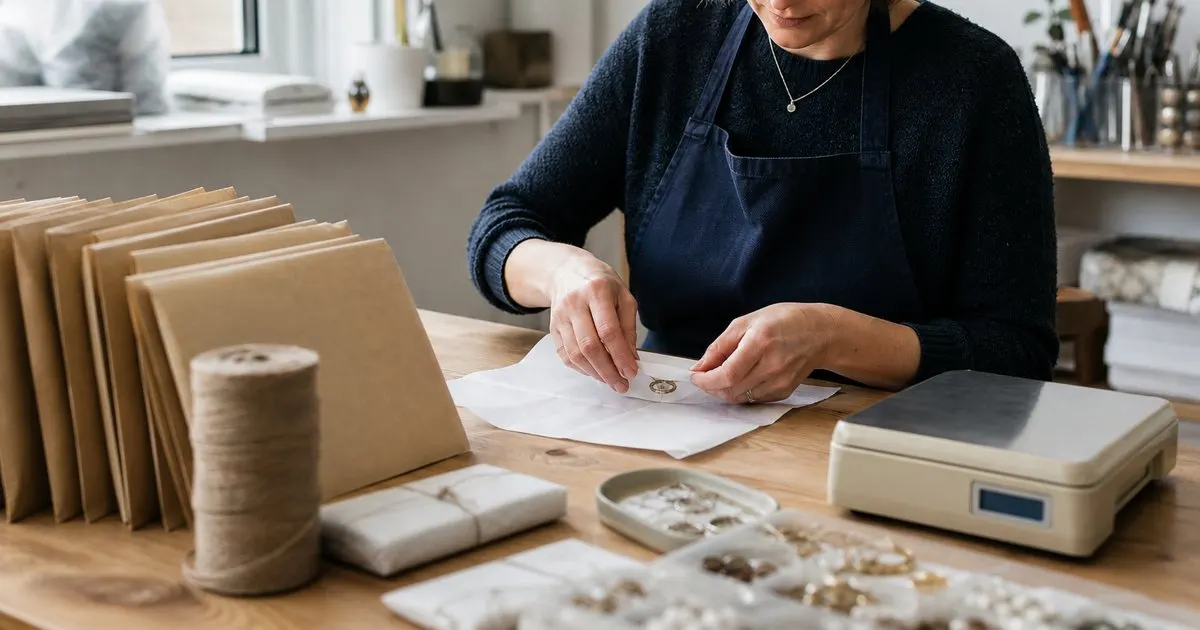
The packaging line is bigger than most makers think
Add up everything that leaves with an order: the outer box or mailer, inner protection such as paper or bubble wrap, the product's own packaging like a jewelry box or pouch, tissue, tape, the shipping label, an insert card, a thank-you note, a sticker, and the minutes it takes to assemble all of it. Most makers price only the mailer. The full stack, once you count it, is frequently a noticeable share of the price on inexpensive items, and it is easy to see why margin on those items looks better on paper than in the bank. Related: Finding Your Most Profitable Products
Packaging also scales badly against low prices. The same box costs the same whether the item inside sells for a little or a lot. That means packaging matters most on your cheapest products and may be almost irrelevant on your most expensive ones. When you look for savings, look at the low end of your catalog first; that is where a small change in packaging cost shows up as a large change in margin percentage. Related: Hidden Costs That Eat Maker Margins
Keep reading: Why Your Handmade Sale Might Be Losing Money, Pricing Handmade Products With Confidence, Hidden Costs That Eat Maker Margins. See how MakerLedgr helps you per-order shipping and profit calculator for handmade sellers.
Choices that move the number
Box size is the big one. Carriers charge by dimensional weight once a package exceeds a certain size, which means a box that is too large can cost more in extra postage than the box itself. Right-sizing your outer packaging, and keeping two or three sizes that fit your products snugly, is often the single largest packaging-related saving available to a small shop. Weigh and measure a few real orders and compare the postage against the next smaller box. Related: Materials Costing Done Right
Buying quantity is the second lever. Mailers and boxes bought by the hundred cost meaningfully less per unit than the same items bought by the ten, but they tie up cash and shelf space, so buy in bulk only for the sizes you actually use most. Custom-printed packaging usually carries high minimums; a plain box with a rubber stamp or a sticker delivers most of the branding effect at a fraction of the cost and with no minimum to sit on. Finally, match protection to risk: sturdier packaging on fragile items costs a little more per order and prevents reships that cost far more.
Choices that feel important but rarely change profit
Tissue color, the exact ribbon, the paper weight of the insert card, the size of the thank-you sticker: these details matter to the unboxing experience and to reviews, but each costs cents. Cutting them saves almost nothing per order while risking the impression that drives repeat purchases. Do not chase pennies here. If you need savings, the box and the postage are where they live.
Eco-friendly materials often cost slightly more per unit. For many product categories buyers value them and they become part of the story that justifies the price, so treat them as a deliberate choice, price them in, and stay consistent. The one real mistake here is swapping to cheaper materials mid-season without updating your product costs, because then your margin numbers are wrong in the direction that makes you feel richer than you are.
Make packaging a per-product cost, not a shop average
A ring, a mug, and a wall hanging need completely different packaging, so a single shop-wide packaging average hides that the mug's box, padding, and postage are eating its margin while the ring barely notices. Build a small packaging bill of materials for each product, including assembly minutes, and update it whenever a supplier changes prices. It takes an hour once and saves you from pricing products on a number that does not apply to them. Related: Why Your Handmade Sale Might Be Losing Money
Track breakage and reships as part of the packaging picture too. Cheaper padding that causes one broken item in fifty can cost more than sturdier padding on all fifty once you count the replacement item, the second postage, and the time. A per-order profit calculator that carries packaging as its own line, which is how MakerLedgr is set up, shows you the real margin per product after everything ships rather than an estimate from launch day.
- Count the whole packaging stack, including assembly time, and expect it to hit cheap items hardest.
- Right-sized boxes and bulk buying of your most-used sizes are the savings that matter.
- Ribbon, tissue, and card stock cost cents; cutting them saves nothing worth the risk to repeat business.
- Cost packaging per product, not per shop, and include breakage and reships in the picture.

Julien Jimenez
Julien Jimenez is an independent software builder based in Paris. He designs, ships, and operates focused SaaS products for small businesses and independent professionals. Read the full author page.
Know the real profit on every handmade order
Per-order shipping and profit calculator for handmade sellers. MakerLedgr is built to help you put this into practice.
See my marginsMore from the MakerLedgr blog

Why Your Handmade Sale Might Be Losing Money
Pricing Handmade Products With Confidence
Hidden Costs That Eat Maker Margins
Get the MakerLedgr playbook
Practical guides on maker economics, straight to your inbox as we publish them. No spam, unsubscribe any time.